
Understanding Play-Based Therapy: How Counselling Helps Children Heal and Grow
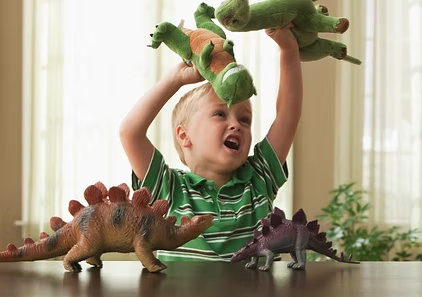
Children experience emotions as deeply as adults do, but they often struggle to put those feelings into words. Instead, they express themselves through play, their most natural form of communication. Play-based therapy uses this natural instinct to help children understand and manage their emotions in a safe and supportive setting. What Is Play-Based Therapy? Play-based […]
Why Early Social Communication Play Matters: The Power of Peekaboo and Beyond

In the earliest months of life, babies begin learning how to connect with the people around them. Long before words emerge, communication is built through shared smiles, eye contact, sounds, and simple back-and-forth interactions. These early moments, often playful and repetitive, are the foundation of social communication. One of the most familiar (and powerful) examples? […]
Summer Activities to Promote Fine Motor Skills

Summertime is a great opportunity to engage your child in fun activities that also promote fine motor development. Fine motor skills refer to the ability to control the small muscles and movements in the hands, fingers, and wrists. Working on these skills helps with tasks such as handwriting, drawing, using utensils, trying shoes, etc. Fine […]
Common Types of Speech and Language Disorders in Children, Halifax, Nova Scotia

Developing strong communication skills is a vital part of childhood, yet many children experience challenges in this area. In fact, approximately 1 in 14 children are reported to have a speech or language disorder. These challenges can impact a child’s ability to produce sounds, speak fluently, or express themselves clearly. In this post, we’ll explore the […]
Fall Prevention Strategies to Improve Home Safety

Falls are the leading cause of injury for individuals 65 years and older. These falls often lead to complications such as broken bones, head injuries, permanent disabilities, or even death in some cases. With simple adjustments to the home environment, we can significantly reduce the risk of falls and help promote safety in the home. […]
Turn-Taking Games and Activities

Turn-taking is a skill that we develop which plays a vital role in our communication skills and social interactions. We use this skill every day, whether it be playing games or conversing with others. This blog post will talk about games and activities that can support the development of turn-taking skills! What is Turn-Taking? Turn-taking is […]
The Importance of Imaginative Play in Development.
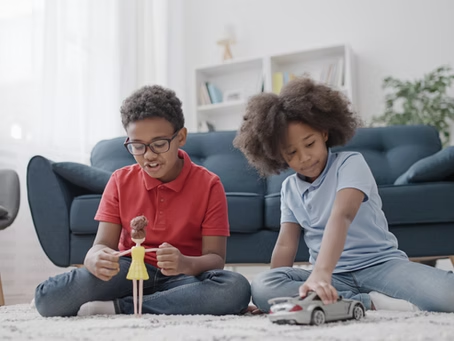
Imaginative play has lots of benefits for learning and development for children. It begins around toddlerhood and gets more complex as children age. This blog post will delve into the importance of children playing imaginatively and how that type of play helps with their development! What is Imaginative Play? Imaginative play is also known as […]
Sensory Challenges & The Proprioceptive System: A Hidden Sense

Sensory Challenges & Proprioception | Halifax Nova Scotia What is the Proprioceptive System? The proprioceptive is one of our 8 sensory systems that is present in everyone. Proprioception allows your brain to understand where your body is in space without having to rely on visual input alone. It is within our muscles and joints and allows […]
What is Babbling and why is it Important for Language Development, Halifax NS.

Communication is a very important aspect of human life and development. While communication is often thought of as verbal, comprehensible, sentences between people, it actually begins in infancy, before coherent sentences can be formed. This is known as the babbling stage. This blog post will talk about what babbling is and why it is an […]
Interoception and its Importance for Regulation:
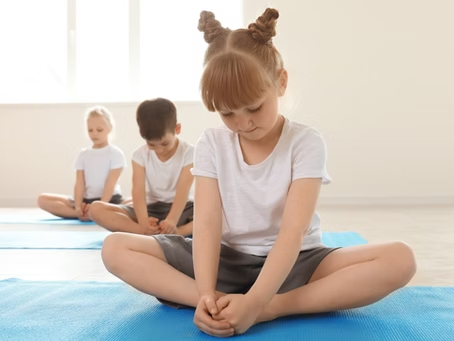
What is interoception? Interoception is a sensory system that allows us to sense the internal signals within your body. Things such as heart rate, hunger, emotions, etc. are all felt due to interoception. These internal signals help individuals understand their feelings and respond appropriately. For example, if you sense hunger, the appropriate action to […]